


Published: 08/10/2026



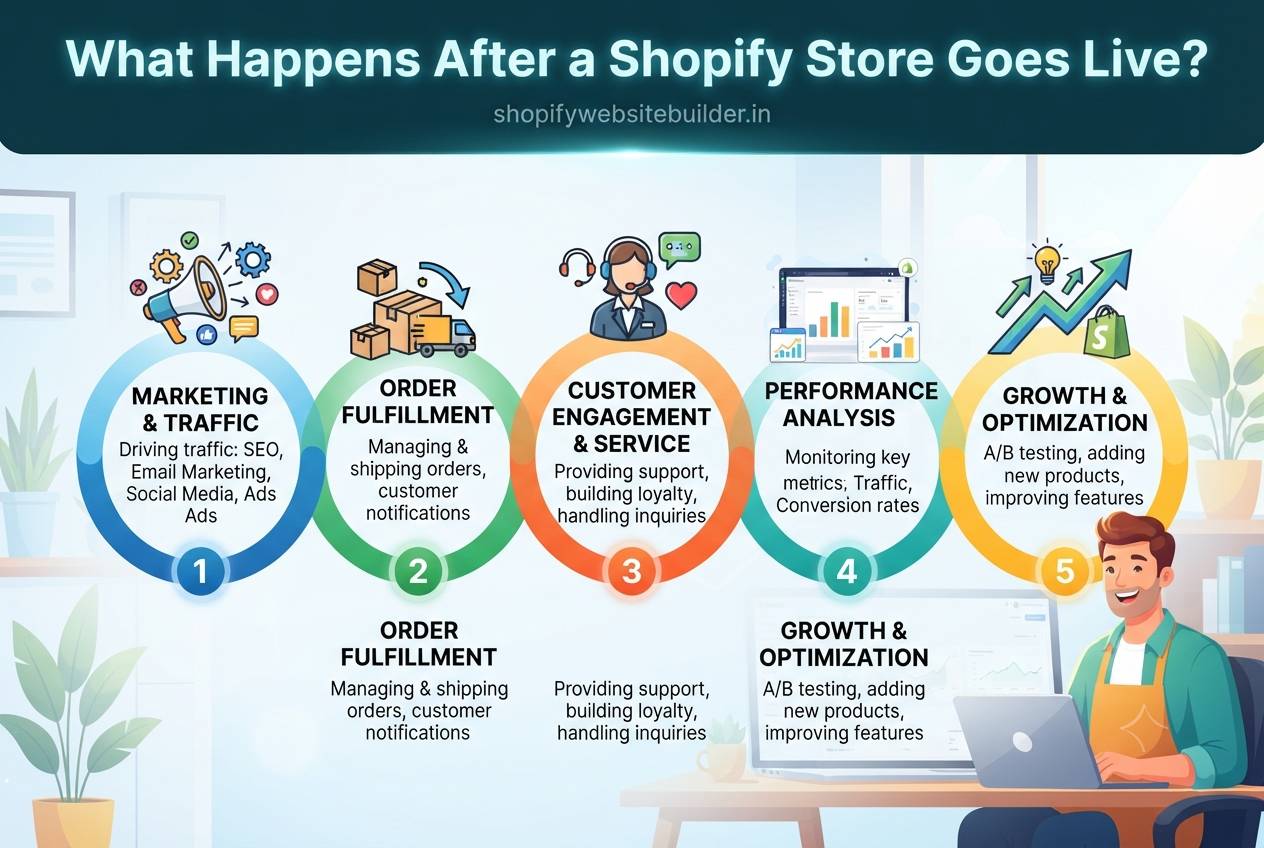
Launching a Shopify store is an important milestone, but it is only the beginning of the e-commerce journey. Once the website goes live, businesses need to monitor performance, attract visitors, manage orders, analyze customer behavior, and continuously improve the shopping experience. Successful launching provides a base, and the continued optimization defines the effectiveness of the base in supporting growth.
A reliable shopify website builder can make the initial setup easier, but store performance depends on what happens after launch. Frequent testing, marketing, analytics, customer support and technical maintenance are all significant factors in transforming a newly opened store into a long-term online business.
Close monitoring should be done during the initial days of launch. Browse product pages, navigation, search, forms, payment methods, shipping options, and checkout processes using desktop and mobile devices.
Simulate the entire buying experience as a customer. Ensure that orders are entered properly, confirmation emails are sent, inventory is updated accordingly, and customers get the appropriate information once they have made a payment.
A brick and mortar shop is not necessarily appealing to the customers. Businesses require a marketing plan that attracts the right visitors to the site using search engines, social media, email marketing, paid advertising, and content campaigns.
Prior to investing a lot of money in advertising, first define your target audience and then identify the channels that are most likely to reach your target audience. Directing qualified traffic to optimized product pages will provide your marketing efforts with a better opportunity to produce conversions.
As soon as visitors start coming, analytics will show how they engage with your store. Track traffic origin, top products, conversion, average order value, carts abandoned, and exit pages.
Working with shopify experts can help businesses interpret these patterns and identify opportunities for improvement. Statistics can show that some items are viewed but not bought, which means that the prices, descriptions, photos, or customer credibility indicators might require optimization.
Once a store is launched, it needs to be maintained with content. The description of products, prices, availability, pictures, shipping, and promotional messages must be true and pertinent.
The old product information may cause confusion and loss of customer trust. Periodic reviews are also a chance to enhance descriptions, include the most common questions, create more effective imagery, and mention the useful product features.
A store that is technically functional might still contain unwarranted friction. Examine the ease with which customers navigate between the homepage and product discovery, cart, checkout, and post-purchase communication.
A shopify website builder provides the basic storefront structure, but businesses should continue refining navigation, filtering, product recommendations, calls to action, and checkout experiences based on actual customer behavior.
Optimization of search engines must be maintained post-launch. Maximize product titles, descriptions, collection pages, metadata, internal links, images, and technical aspects to enhance organic visibility.
Customers can also be attracted to the buying journey at an earlier stage by publishing helpful content. Qualified search traffic can be achieved through educational articles, buying guides, product comparisons, and answers to frequently asked questions, which also builds brand authority.
The speed and functionality of the websites should be looked into frequently as the store develops. The performance can be sometimes influenced by adding applications, bigger images, tracking scripts, or custom features.
Skilled shopify developers are able to audit technical problems, streamline code, enhance page performance, and resolve functionality problems that emerge post-launch. Technical reviews can be conducted regularly to ensure that minor problems do not turn into significant disturbances.
The initial acquisition is just one aspect of e-commerce development. Businesses must also provide reasons to come back again by loyalty programs, personalized offers, helpful email campaigns, product recommendations, and superior after sales services.
The most effective retention strategies are those that offer real value as opposed to sending frequent promotional messages that are not relevant. Customer relationships must go beyond single transactions.
As your business grows, you may add apps for email marketing, accounting, inventory management, customer support, reviews, subscriptions, or shipping. Every further integration must have an apparent advantage.
Shopify experts can help review your technology stack and identify applications that overlap, create unnecessary costs, or no longer serve a useful purpose. Maintaining the store lean can enhance efficiency and lessen technical complexity.
A store that performs well during the initial launch might require new capabilities as the volumes of orders and customer expectations grow. Companies ought to periodically analyze their infrastructure, fulfillment procedures, marketing plan, and workflows.
Tailor-made solutions can be required as the business evolves. Shopify developers can assist in adding more sophisticated features, integrations, and workflows that can accommodate evolving needs without requiring a full rewrite.

Going live is not the finish line for a Shopify store. It is the start of the cycle of testing, marketing, analysis, technical maintenance and customer interaction. An effective store is not just opened, it is constantly developed to fit the needs of customers and evolving business objectives.

© Shopify Website Builder All rights reserved.