


Published: 08/10/2026



Selling digital and physical products from the same online store can create a powerful business model. One brand can offer downloadable guides, courses, templates, subscriptions, apparel, accessories, or other tangible products to customers. Nevertheless, integrating product types necessitates proper planning around product pages, fulfillment, checkout, customer communication, and inventory.
A flexible shopify website builder can provide the foundation for managing both product categories within one storefront. The trick is to make the shopping experience such that the customers know what they are purchasing and what will happen after they check out.
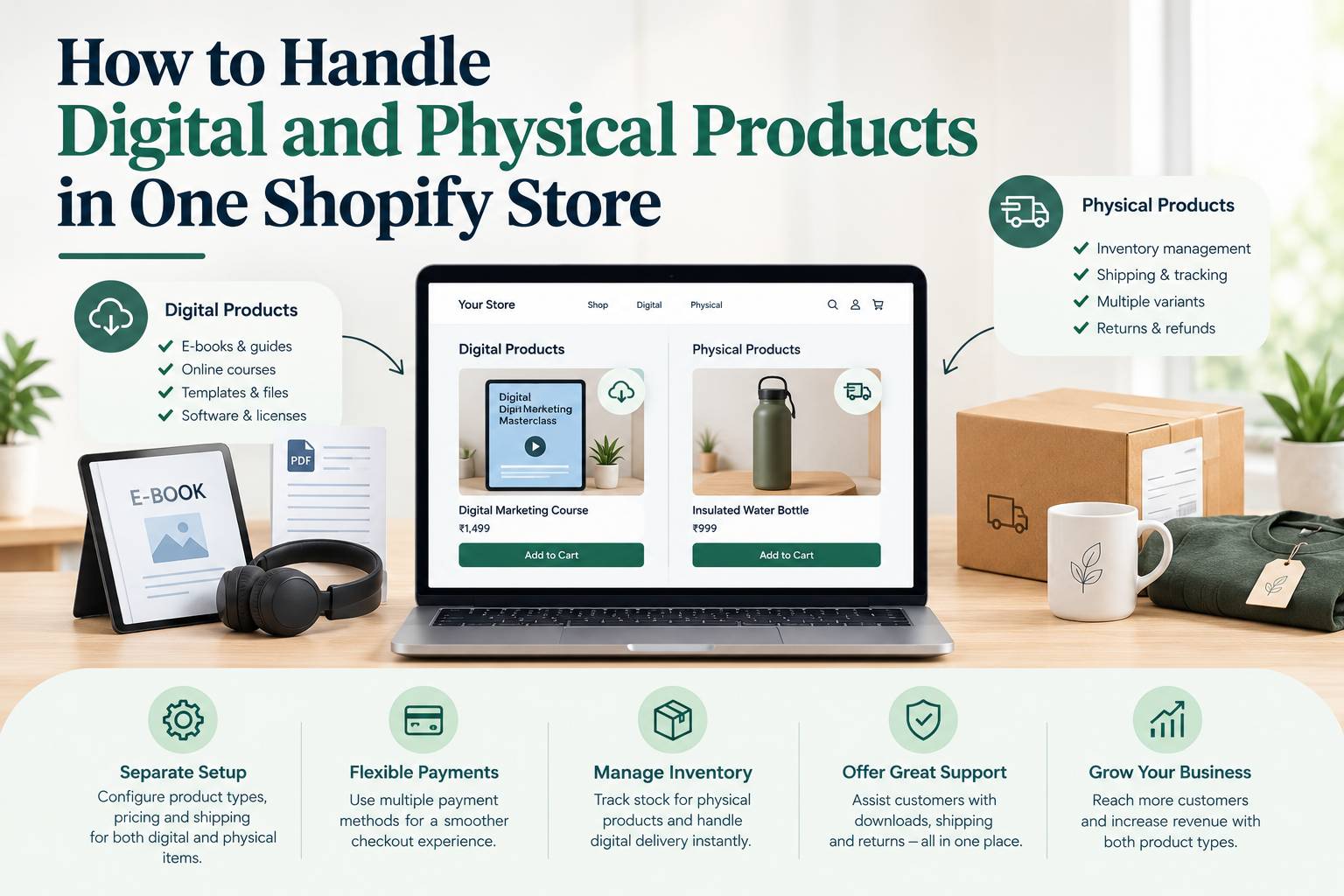
The customers must not confuse digital products and physical products. Arrange products into distinct groups according to product type, purpose, audience, or use case.
Name categories that convey what shoppers will see. Product differences can also be made immediately apparent through visual labels like “Digital Download,” “Ships to You,” or “Instant Access.”
Digital and physical products may need various information. Physical products might require dimensions, materials, shipping information, care directions, and delivery estimates. Digital products can demand file formats, access guidelines, compatibility data, and download data.
A shopify website builder can support a consistent visual identity while allowing product pages to communicate different purchasing expectations. Having valuable information close to the purchase button will help to eliminate hesitation and misunderstandings.
Customers ought to know when and how they will get each kind of product. Physical goods can include processing and shipping time, whereas digital goods can be accessed instantly upon payment.
Definitely clarify the delivery procedures, approximate shipping schedules, downloading guidelines, and accessibility. Open information will make the buying process easier and minimize the number of customer service calls made after the purchase.
Digital products must be readily available upon purchase. Clear instructions should be given to customers via confirmation emails, download pages or customer accounts.
Do not use complex procedures that make buyers search files or call the support many times. Automated delivery will save your team time and provide a more professional after-sale experience.
Physical goods need proper inventory management to avoid over-selling. Maintain inventory levels and track items that sell regularly as well as online products.
Think about whether physical inventory is kept in-house, fulfilled by a fulfillment partner, or distributed in multiple locations. The centralized strategy will simplify the order processing process as the business expands.
Mixed carts may pose special fulfillment issues. A customer can buy a digital template and a physical notebook at the same time, but each item has a different delivery procedure.
Experienced shopify experts can help businesses structure workflows so digital items are delivered electronically while physical products move through the appropriate shipping process. This separation improves operational clarity without making the customer experience complicated.
When customers look at their cart, they should be able to easily identify which products are digital and which need to be shipped. Fulfillment expectations can be communicated by product labels, icons, or brief descriptions.
When a cart has physical products, shipping charges should also be clarified. Digital products must not cause any unnecessary shipping confusion or leave customers wondering whether they will get something in the mail.
Each type of product should have useful information in the order emails. Physical product buyers require shipping confirmations and tracking information, whereas digital buyers require access instructions.
For mixed orders, communication should clearly explain both processes. Customers are supposed to be aware of what is in stock and what will be delivered later.
A shop with various types of products should ensure that it is easy to browse. Individual collections, filters, search options, and menu categories can assist visitors to find what they require fast.
Do not make customers go through irrelevant products. A well-structured navigation system makes the store feel more organized and gives each product category room to stand out.
Licensing, subscriptions, custom downloads, bundles, or complicated fulfillment require sophisticated functionality in some businesses. Off-the-shelf applications might not necessarily offer the exact workflow needed.
Experienced shopify developers can build or customize features that support specialized product models. Custom functionality can improve the customer experience while reducing manual work behind the scenes.

Managing digital and physical products in one Shopify store is entirely achievable with thoughtful planning. Clear product pages, organized navigation, transparent fulfillment information, accurate inventory, and coordinated customer communication can make the experience simple for both shoppers and your team. With guidance from shopify experts, businesses can bring different product types together while maintaining a cohesive brand experience.

© Shopify Website Builder All rights reserved.