


Published: 08/10/2026



Running a growing online store means handling more than product listings and orders. Businesses must also handle customer data, discussions, sales prospects, marketing efforts, and after sales relationships. When these activities occur in disconnected systems, valuable information may be hard to trace.
A shopify website builder can create the foundation for your online storefront, while CRM integration connects customer data with the rest of your business operations. The relationship can assist businesses to learn more about shoppers, tailor messages and enhance relationships as the customer base grows.
In the absence of CRM integration, customer data can be fragmented in order records, email systems, spreadsheets, and support systems. A related CRM can get a lot of this information into a single system.
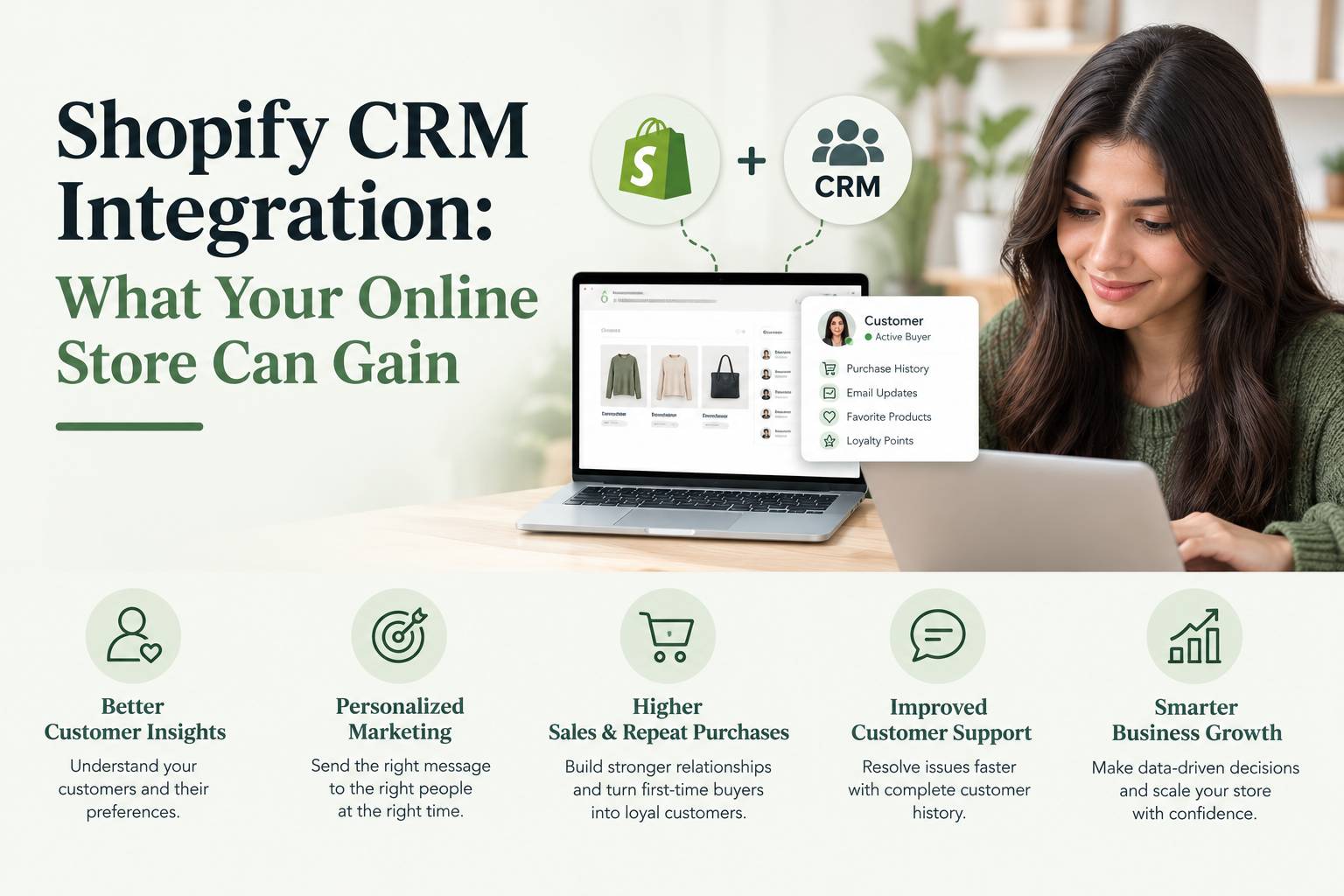
Contact information, purchase history, past interactions, preferences, and activity can be included in customer profiles. The availability of this information in a single location assists teams to have a better understanding of the customer journey and respond more contextually.
Not every customer should receive the same message or promotion. A CRM may assist companies to group shoppers into valuable segments according to their buying patterns, place, frequency of orders, interests, or activity levels.
Customer segmentation strategies are used by many shopify experts to assist businesses in developing more relevant campaigns. Brands can customize communication according to what various groups are most likely to require instead of sending the same message to all.
CRM integration enables customer data to be directed into marketing processes. This can make it easier to create personalized emails, product recommendations, promotional offers, and follow-up campaigns.
As an example, first-time buyers can get onboarding messages, whereas returning customers can get loyalty offers. Customers who have not purchased recently may receive re-engagement campaigns designed around their previous interests.
Customer service teams should have fast access to the relevant information in answering questions. An integrated CRM may display past purchases, communication history, order details, and customer preferences as well as support requests.
This enables the representatives to give more informed answers without requiring the customers to repeat what they have already told them. Faster and more contextual support can improve satisfaction and create a more consistent experience.
A CRM can give a better understanding of customer activity beyond the purchases made. Businesses are able to track leads, repeat customers, high value accounts, and potential sales.
A good CRM strategy assists teams in recognizing trends that otherwise would be invisible. As an example, customers who buy a specific type of products on a regular basis can be good targets of related products, bundles, or subscriptions.
The more a store grows, the more automation is helpful. CRM integrations may be triggered by purchases, customer activity, abandoned carts, support interactions, or customer status changes.
A shopify website builder combined with CRM automation can support welcome sequences, follow-up messages, review requests, loyalty reminders, and re-engagement campaigns. Automation minimizes repetitive tasks and makes sure that key customer touchpoints occur in a consistent manner.
Integrated customer data can help businesses make more informed decisions. Teams do not need to make assumptions but can analyze purchasing trends, retention, average order value, campaign activity, and support interactions.
These insights can reveal which products attract loyal customers, which campaigns perform well, and where customers may be losing interest. Marketing, sales, and customer retention strategies can be enhanced by using data-driven decision-making.
E-commerce growth does not just involve acquiring new customers. Existing customers can be encouraged to come back, which can generate more long-term value.
CRM integration simplifies the process of recognizing repeat customers and interacting with them through the use of relevant rewards, personalized content, exclusive offers, and product suggestions. Regular communication makes customers feel appreciated instead of being anonymous transactions.
Every business has different CRM and customer management requirements. Common needs can be covered by standard integrations, but certain stores might need tailored workflows, data synchronization, or specialized functionality.
Experienced shopify developers can customize CRM connections to support unique business processes. Tailor-made solutions can be handy in cases when companies require sophisticated segmentation, sophisticated automation, custom dashboards, or integrations with other platforms.
A CRM integration is only valuable when customer information remains accurate. Companies ought to set up explicit regulations on data gathering, duplicate records, authorizations, and updates.
Regularly reviewing the integration can help identify synchronization issues and outdated information. Clean customer data enhances the accuracy of reporting and makes sure that marketing and support teams are operating with quality information.

Customer information could become a viable business asset with the help of Shopify CRM integration. Linking order history, communication, marketing activity, and customer preferences, businesses are able to provide more personalized experiences and make improved decisions. With support from experienced shopify experts and a well-planned technology setup, your online store can use CRM data more effectively while building stronger customer relationships.

© Shopify Website Builder All rights reserved.